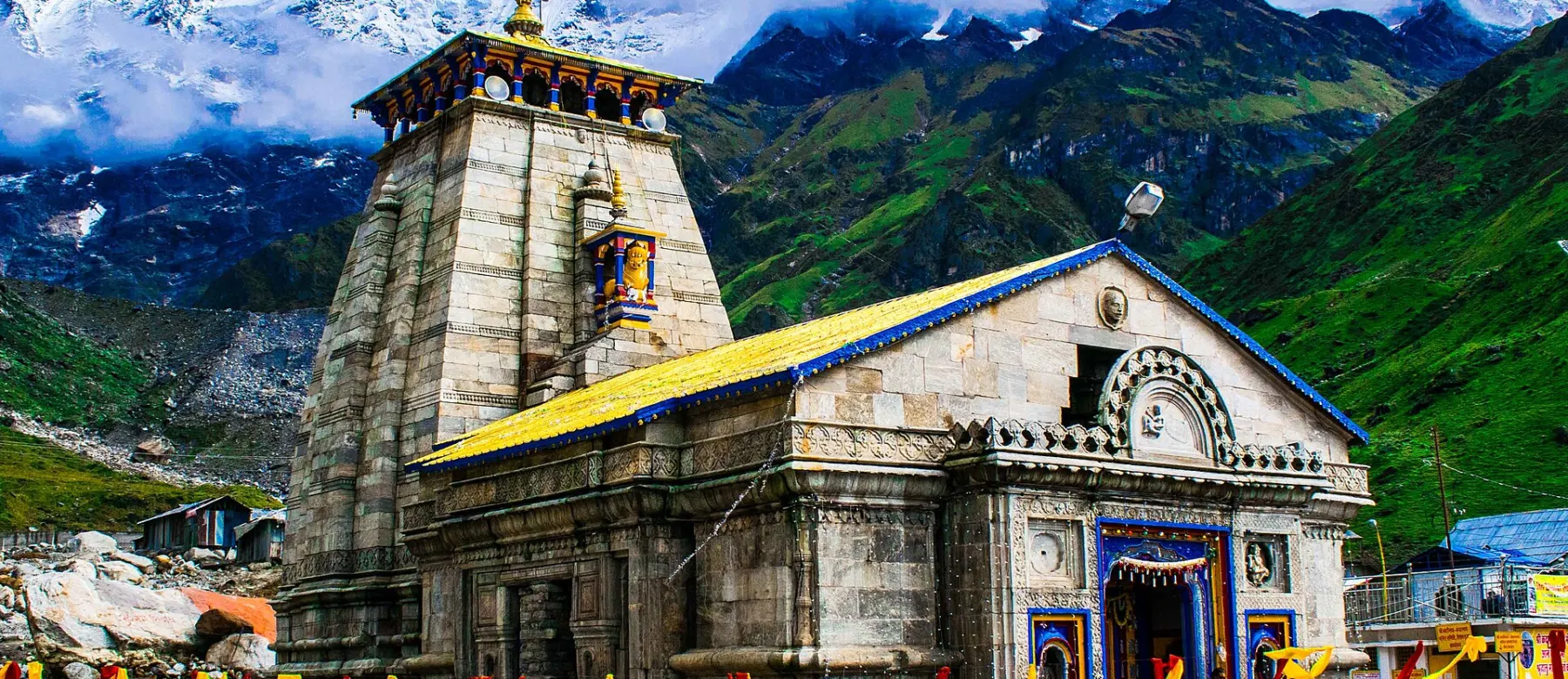
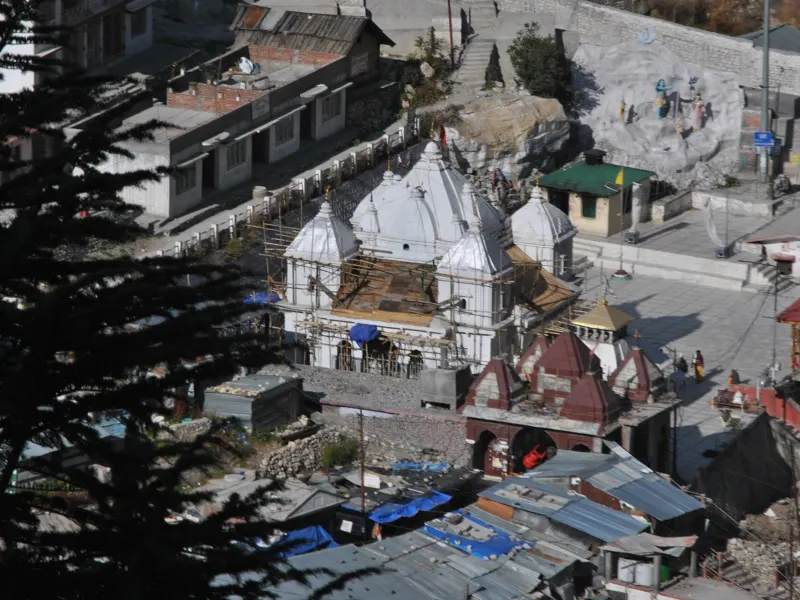
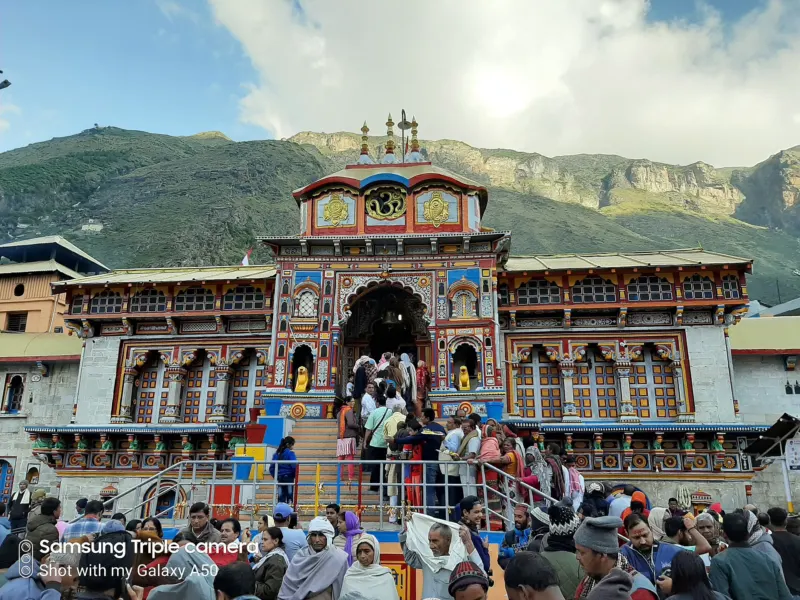
The Chardham Yatra covers four Himalayan shrines in Uttarakhand: Yamunotri, Gangotri, Kedarnath and Badrinath, usually visited in that order. By road from Haridwar the full circuit runs over 1,500 km and takes 10 to 11 nights at a sensible pace. The shorter Do Dham Yatra covers only Kedarnath and Badrinath in 6 to 7 nights. Both run only while the temples are open, from late April or May until October or November. We plan the yatra from Haridwar, with registration, hotels, a car and driver, and a pony, palki or helicopter booked for anyone who can’t do the treks.
Chardham Yatra packages at a glance
| Package | Nights | What it covers | Best for |
|---|---|---|---|
| Do Dham: Kedarnath and Badrinath | 6N / 7D | Haridwar, Kedarnath trek or helicopter, Badrinath and Mana | Families short on leave, first-timers |
| Chardham by road ex-Haridwar | 10N / 11D | All four dhams by car, a night at Kedarnath, Mana village | The full yatra at a pace seniors can manage |
| Chardham with extra rest days | 12N / 13D | The same route with spare days at Uttarkashi and Guptkashi | Elderly parents, monsoon-edge dates |
| Kedarnath only | 4N / 5D | Haridwar to Guptkashi, trek or helicopter, back | A single-dham trip |
The full day-wise plan for Chardham Yatra by Road 10N/11D is on its own page. The other formats are built from it, adding or dropping days, and any of them can be changed to suit you.
When the temples open and close
The 2026 season is ending now. Badrinath is the last to close, on 16 November 2026 at 9:37 pm, as announced on Vijayadashami. The Badrinath-Kedarnath Temple Committee closes Kedarnath on Bhai Dooj, 11 November 2026, at 8:30 am. Gangotri traditionally closes on Annakoot and Yamunotri on Bhai Dooj, which this year fall on 10 and 11 November. In winter the deities move to Ukhimath (Kedarnath), Mukhba (Gangotri) and Kharsali (Yamunotri).
For 2027, no opening dates have been announced yet. Gangotri and Yamunotri open on Akshaya Tritiya, which panchangs put on 9 May 2027. Badrinath’s date is fixed on Basant Panchami and Kedarnath’s on Mahashivratri, so expect both by early March. In 2026 the four opened between 19 and 23 April.
Good to know: Haridwar hosts the Ardh Kumbh from January to April 2027. It should be over before the dhams open, but if you plan to bathe at the Kumbh and then do the yatra, book Haridwar hotels very early. See our Haridwar and Rishikesh guide.
Registration is compulsory
Every pilgrim has to register with the Uttarakhand government before setting off. It’s free. You create a login on the official registration portal or the Tourist Care Uttarakhand app, add each traveller with a photo and ID, choose the dhams and dates, and download a QR-coded registration letter. It’s checked on the route, including at Sonprayag before Kedarnath, and you also need the registration number to book a Kedarnath helicopter. Offline counters run at Haridwar and Rishikesh, but the queues are long in May. We register your group online once your dates are fixed. The state’s helpline is 1364.
The route and road distances from Haridwar
These figures come from the state tourism board’s GMVN itineraries. Hill roads are slow, so plan on 25 to 35 km an hour.
| Stretch | Distance | On foot |
|---|---|---|
| Haridwar to Phoolchatti (near Janki Chatti), via Barkot | 236 km | Yamunotri: about 5 km each way from Janki Chatti |
| Yamunotri side to Uttarkashi and Harsil | About 200 km | Gangotri: none, the road reaches the temple |
| Uttarkashi to Guptkashi, via New Tehri | About 275 km | None |
| Guptkashi to Gaurikund, via Sonprayag | About 35 km | Kedarnath: about 16 to 17 km each way |
| Badrinath to Rudraprayag | About 165 km | Badrinath: none |
Private cars stop at Sonprayag. From there a shared shuttle takes you up to Gaurikund, where the Kedarnath trek starts. Vehicles are allowed on yatra roads only between 4 am and 10 pm, which is why the long days start before dawn.
Kedarnath: on foot, pony, palki or helicopter?
Kedarnath is the hard one. The walk from Gaurikund climbs steadily for a full day, and the temple stands at about 3,583 m. Your options:
- Walk. A fit adult takes most of a day to go up. We plan a night at Kedarnath so nobody has to come down in the dark.
- Pony, palki (doli) or pithu. Rates are fixed by the district and posted at the Gaurikund counter. Hire only from the registered counter and keep the slip.
- Helicopter. Shuttles fly from Guptkashi, Phata and Sersi to a helipad near the temple. 2026 one-way fares before GST were ₹6,077 from Guptkashi, ₹4,840 from Phata and ₹3,043 from Sersi. Tickets are sold only on IRCTC’s heliyatra portal. Other sites selling Kedarnath helicopter seats are usually frauds. Flights stop in bad weather, so keep a fallback plan.
Health advice for senior citizens
Altitude, cold and long road days are the real risks, more than the treks. The state’s 2026 health advisory asks pilgrims over 55, and anyone with heart disease, high blood pressure, asthma or diabetes, to get a medical check-up before the yatra. Elderly pilgrims may be asked for a fitness certificate or screened on the spot. It also suggests:
- 24 to 48 hours in Haridwar or Rishikesh before going higher, which is why our itineraries start with a night there.
- Daily walking for a month beforehand.
- A pulse oximeter. If oxygen saturation drops below 90%, go to the nearest Medical Relief Post. There are 20 of them on the trekking routes.
- No alcohol, warm water to drink, and regular medicines in your hand luggage.
For parents in their 70s we usually suggest the helicopter for Kedarnath and a pony or palki for Yamunotri. Gangotri and Badrinath need no trekking.
Best time to go, and the monsoon problem
May and June are the busiest months, with Indian school holidays and the opening rush. September after the rains and October are clearer, quieter and colder. Avoid July and August if you can. On 28 and 29 July 2026 the whole yatra was suspended over landslides and a heavy-rain warning, and the Kedarnath trek was shut again after a slide near Gaurikund. If the monsoon is your only window, add a spare day or two.
Getting to Haridwar
From Mumbai the Dehradun Express runs from Bandra Terminus to Haridwar in about 31 hours. From Delhi the Vande Bharat to Dehradun stops at Haridwar about three and a half hours out of Anand Vihar. The nearest airport is Jolly Grant at Dehradun. Flying Mumbai or Pune to Dehradun saves more than a day.
Questions pilgrims ask before booking
Can I do the yatra in fewer than 10 nights?
By road, not comfortably. Cutting days means 12-hour drives back to back, which hits elderly travellers hardest. If you’re short of time, do the Do Dham trip this year and Yamunotri and Gangotri another year.
Do I need to register if I’m only going to Kedarnath?
Yes. Registration is required for any of the dhams, and the Kedarnath helicopter can’t be booked without it.
Can I take my phone into the temples?
No. Phones and cameras are banned inside the temple premises. Keep them with your driver or at the hotel.
When should I book for May 2027?
Once the opening dates are announced, around February to March. Hotels at Guptkashi, Sitapur and Badrinath fill first, and helicopter tickets open in short windows on the IRCTC portal. Tell us your dates early and we’ll book as soon as sales open.
Checked November 2026. Registration rules are from the Uttarakhand registration and tourist care portal, and route distances from Uttarakhand Tourism’s GMVN itineraries. Closing dates, 2026 opening dates, helicopter fares, health advisory and monsoon suspensions are from news reports (PTI, IANS and others) of April to October 2026. The 2027 Akshaya Tritiya date is from published panchangs. Opening dates for 2027 had not been announced when we checked, and we confirm everything again when we send your quote.