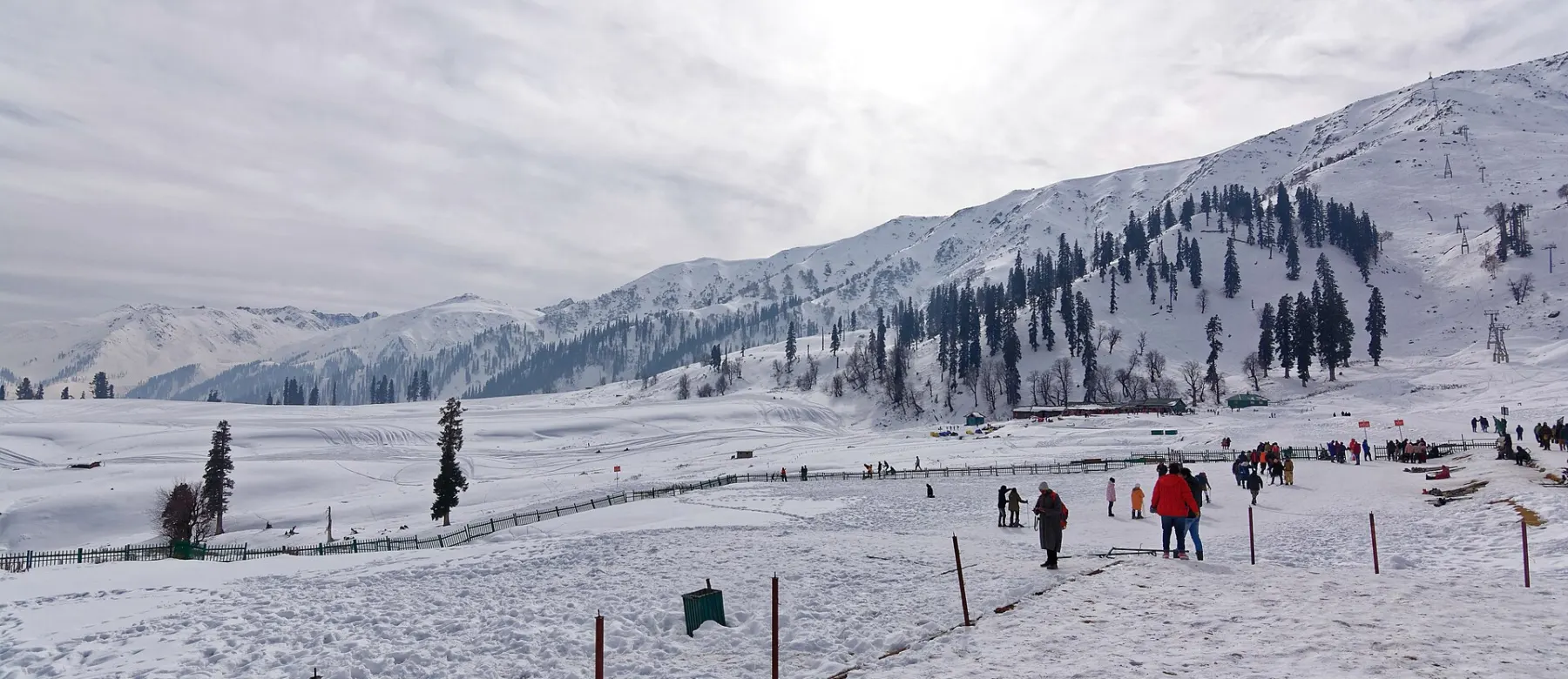
Gulmarg is the best place in India to learn to ski, and there are two ways to do it. You can take the government-run 14-day course at the Indian Institute of Skiing and Mountaineering (IISM), which costs ₹10,000 if you’re 25 or under and ₹20,000 if you’re older, with stay, food and equipment included. Or you can come for a few days, hire a certified instructor and learn on the beginner slopes. The course is the bargain. The DIY route is the flexible one. Either way, the snow itself is the real uncertainty this season, so plan for January to early March.
When is there enough snow to ski?
Usually from January to mid-March. December can work, but it’s a gamble. Last winter showed why: Jammu & Kashmir got about 65% less precipitation than normal in 2025–26. December was 78% short and February 89% short, and Gulmarg had long dry spells. Proper snow came at the end of December, and the full set of ski slopes only reopened in late January 2026.
For 2026–27, the Srinagar Meteorological Centre expects a “relatively mild and dry winter”, while noting that one or two strong western disturbances could change that. If you can, book something you can move, or go later in the season rather than earlier.
Option 1: the IISM 14-day course
This is the classic way Indians learn to ski, and it’s very good value. The fee covers boarding, lodging, training and ski equipment for the full 14 days. Day 1 is arrival and equipment issue, and day 14 is departure.
| Session (2026–27) | Dates | Seats for Basic (beginners) |
|---|---|---|
| S1 | 20 Dec – 2 Jan | 80 seats shared across all levels |
| S2 | 3 – 16 Jan | 50 |
| S3 | 17 – 30 Jan | 50 |
| S4 | 31 Jan – 13 Feb | 40 (plus 20 snowboarding seats) |
| S5 | 14 – 27 Feb | 50 |
| S6 | 28 Feb – 13 Mar | 50 |
- Fee: ₹10,000 up to age 25, ₹20,000 above 25. It’s non-refundable, non-transferable, and can’t be moved to another session.
- Age: 10 to 40.
- Booking: opens 12 November 2026 at 10 am on admission.iismgulmarg.in, first come, first served. Peak sessions fill quickly, so be online at 10.
- Documents: photo, signature, an educational certificate and proof of date of birth when applying. You also need a medical fitness certificate from a doctor when you report, and you’ll sign an indemnity form.
- If there’s no snow: IISM says it will arrange “alternative adventure activities”. Given last winter, the January and February sessions are the safer bets.
To move up to Intermediate later, you need a B or A grade in Basic. Leave before day 14 and you don’t get the certificate.
Option 2: learn on your own trip
If you can’t take two weeks off, three or four days with a good instructor will get most people from “can’t stop” to linking gentle turns on easy slopes. Here’s how a beginner progresses in Gulmarg:
- Baby slopes near the village (Highland area). These are flat, short and the right place for your first day.
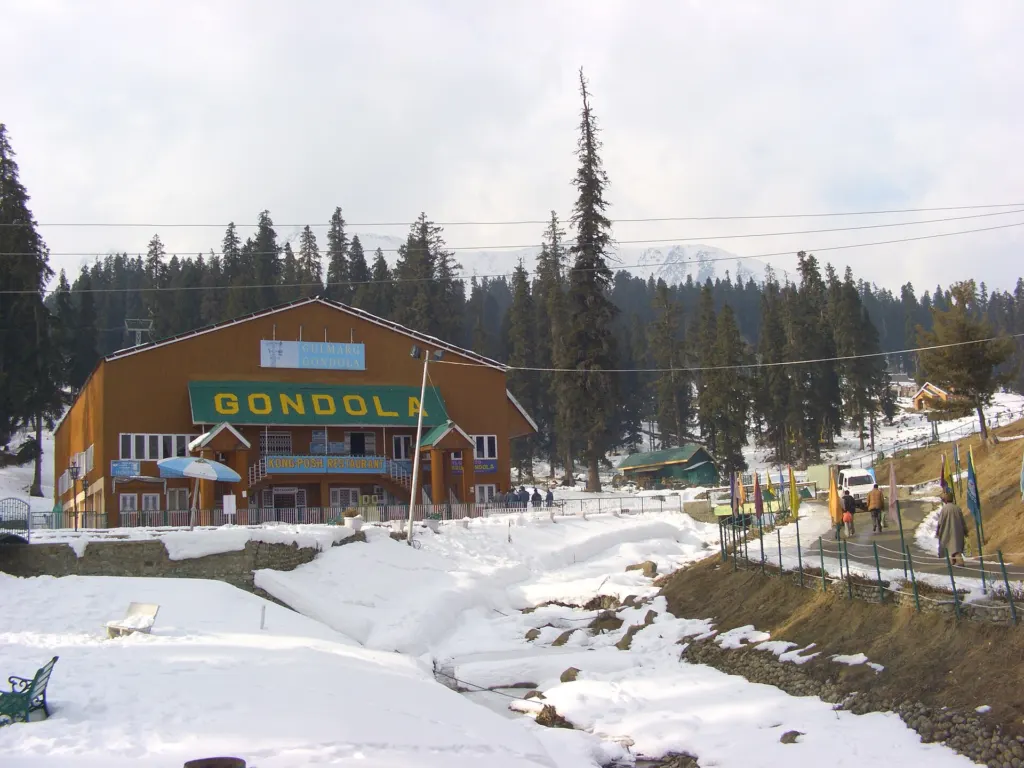
- Kongdoori, at the top of Gondola Phase 1. This is the beginner and intermediate area. A 726 m drag lift opened here in December 2025, which means more time skiing and less time climbing. There’s also a chairlift.
- Phase 2 to Apharwat isn’t for beginners. It’s high, steep, ungroomed mountain terrain. Save it for a future trip.
Buy lift and ski passes only through the J&K Cable Car Corporation’s official portal (etickets.jammukashmircablecar.com). Ski passes are priced differently from sightseeing gondola tickets. Published figures disagreed in 2026, and locals complained about rising pass prices, so check the portal rather than a blog.
Choosing an instructor
This is the decision that matters most. In February 2026, Gulmarg’s tourism officials said only about 20 instructors were registered and certified with the Tourism Department, and warned about uncertified “instructors” approaching beginners on the slopes. Before you agree to anything:
- Ask to see the instructor’s certification and registration with the Tourism Department.
- Agree on the price, the hours and what’s included (gear? lift pass?) before you start. Rates aren’t fixed by the government.
- Ask your hotel or IISM for recommendations rather than taking whoever walks up to you at Kongdoori.
Renting gear and clothes
You don’t need to buy anything. Typical daily rental prices reported in January 2026:
| Item | Per day (approx.) |
|---|---|
| Ski set (skis, boots, poles) | ₹800–1,500 |
| Snowboard | ₹700–1,500 |
| Ski jacket | ₹250–300 |
| Waterproof trousers | ₹150–200 |
| Goggles | about ₹100 |
Bring your own thermals, warm socks, gloves and a cap. Rented goggles and jackets are fine, but you’ll be happier with your own base layers. Sunscreen too: snow at altitude burns faster than a Goa beach.
Staying safe on the mountain
Gulmarg’s beginner areas are safe if you stay in them. The serious accidents have happened elsewhere. A Russian skier died in an avalanche in February 2024 in a non-ski zone off Apharwat, after a warning had been issued. Two Polish skiers died in February 2023 in an area already declared a red zone. In both cases, people were outside the safe areas despite warnings.
- Check the Gulmarg Avalanche Centre’s advisories and the J&K Disaster Management Authority’s warnings, especially after fresh snow.
- Stay on marked slopes. Don’t follow anyone, however confident they seem, into ungroomed terrain.
- A Tourism Department ski patrol operates in season. Tell your instructor or hotel where you’ll be.
Getting there and where to stay
Gulmarg is roughly 50 km from Srinagar: about an hour to Tangmarg, then about 30 minutes up the hill. In snow, only 4x4s or cars with anti-skid chains are allowed above Tangmarg. The government-set fare cap for a taxi from Tangmarg to Gulmarg is ₹2,500, and in September 2026 police seized vehicles for overcharging. If someone quotes you double, you know what to say.
For somewhere to stay, JKTDC (the state tourism corporation) has huts and a dormitory in Gulmarg, bookable through jktdc.co.in. Private hotels range from simple guesthouses to the big resorts. Winter is peak season, so book early, and confirm the room is properly heated.
A 4-day beginner plan
- Day 1: Srinagar to Gulmarg, collect your gear, and spend an hour on the baby slopes getting used to the boots.
- Day 2: full day with an instructor on the baby slopes: stopping, snowplough turns, getting up after a fall (you’ll practise this a lot).
- Day 3: Gondola Phase 1 to Kongdoori and the drag lift. Longer runs on easy terrain.
- Day 4: a morning at Kongdoori, then back to Srinagar. Or stay a fifth day as a buffer if snow or roads play up.
Combining skiing with the rest of the valley? See our Kashmir tour packages for Srinagar and Gulmarg stays.
Quick answers
Can I learn to ski in 3 days in Gulmarg?
You can learn the basics (stopping, turning and riding a drag lift) in 3–4 days with a good instructor. To ski confidently, the 14-day IISM course is the better route.
How much does the IISM ski course cost?
₹10,000 if you’re 25 or under and ₹20,000 if you’re older, for 14 days including stay, food, training and equipment.
What is the best month for skiing in Gulmarg?
Usually late January to February. December is less reliable, and recent winters have been short of snow.
Is a gondola ticket the same as a ski pass?
No. Ski passes are priced separately from sightseeing tickets. Check both on the official J&K Cable Car portal.
Planning the rest of the trip? Our Kashmir in winter guide covers temperatures, the train to Srinagar, Dal Lake and the SIM card rule.
Facts checked November 2026. Sources include IISM Gulmarg (course schedule and admission rules), the J&K Cable Car Corporation, JKTDC, IMD and the Srinagar Meteorological Centre (via ETV Bharat and Rising Kashmir), and reporting by Greater Kashmir, Kashmir Life, Kashmir Reader, Outlook Traveller, The Tribune and Aaj Tak. Rental prices are typical figures and aren’t regulated.