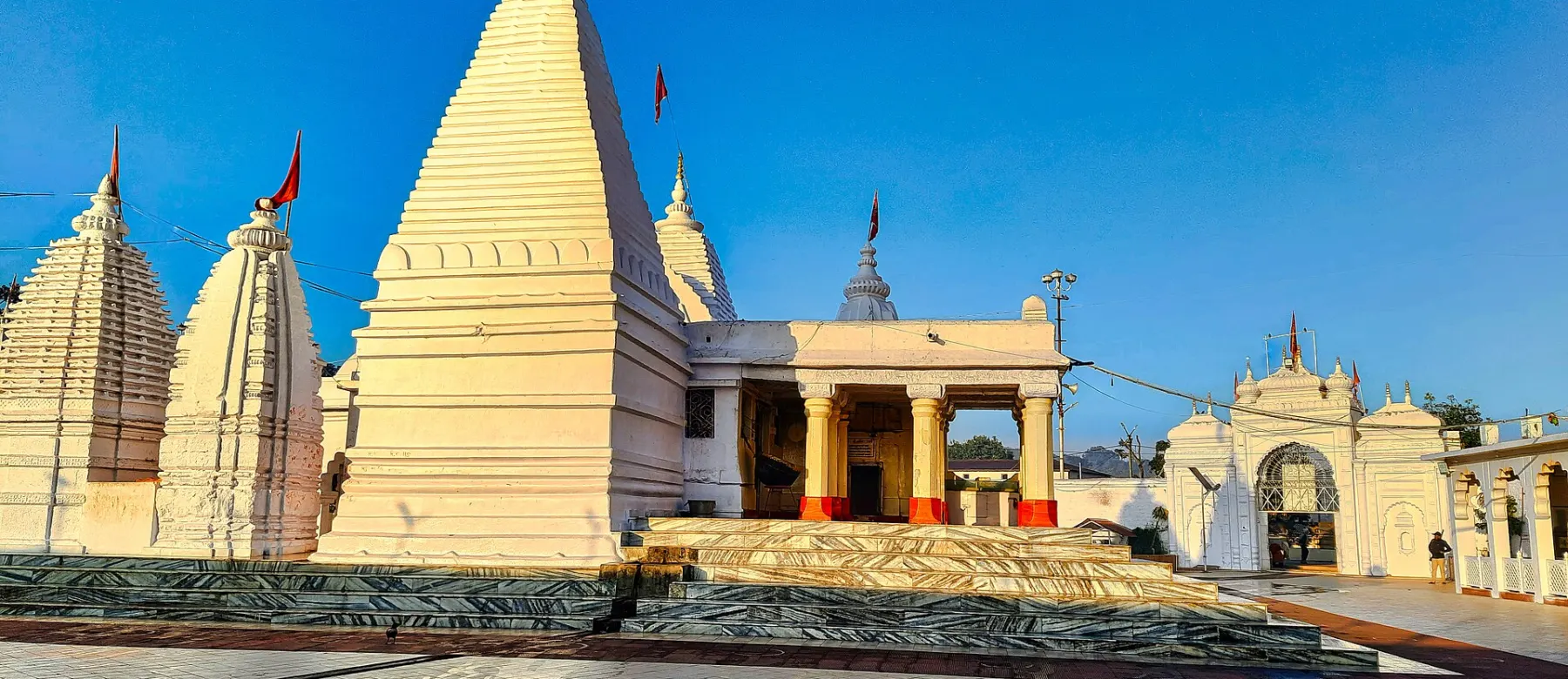

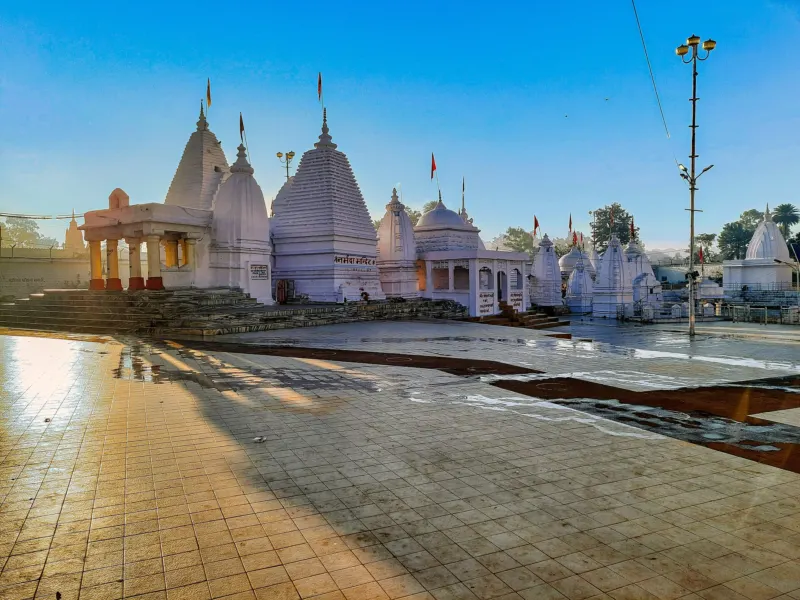
The full Narmada Parikrama is a walk around the whole river: down one bank to the sea, back up the other to the source at Amarkantak, roughly 3,500 km in all. On foot it takes most pilgrims six to eight months. For most families, “Narmada Parikrama” in practice means one of two shorter trips: the Uttar Vahini Parikrama, a one-day walk of about 18 to 21 km near Rampura in Gujarat held for one month around Chaitra, or a road trip to the main tirths between Omkareshwar and Amarkantak. We arrange both, and we can help walkers with the start and the logistics of the full parikrama.
Narmada Parikrama packages at a glance
| Package | Nights | What it covers | Best for |
|---|---|---|---|
| Uttar Vahini Parikrama | 2N / 3D | The north-flowing stretch between Rampura and Tilakwada, walked in one day, with boat crossings | Families, first-timers, a long weekend in March or April |
| Narmada tirth yatra by road | 9N / 10D | Omkareshwar, Maheshwar, Narmadapuram, Jabalpur and Bhedaghat, Mandla, Amarkantak | Senior citizens, anyone who can’t walk for months |
| Full parikrama by vehicle | About 14N / 15D | Both banks from Omkareshwar to the sea near Bharuch and back via Amarkantak | Pilgrims who want the complete circuit in one trip |
| Walking parikrama support | Months, on foot | Travel to your starting ghat, sankalp, and help at the start and finish | Pilgrims doing the traditional parikrama |
The full day-wise plan for Uttar Vahini Narmada Parikrama 2N/3D is on its own page. The other formats are built from it, adding or dropping days, and any of them can be changed to suit you.
How the full parikrama works
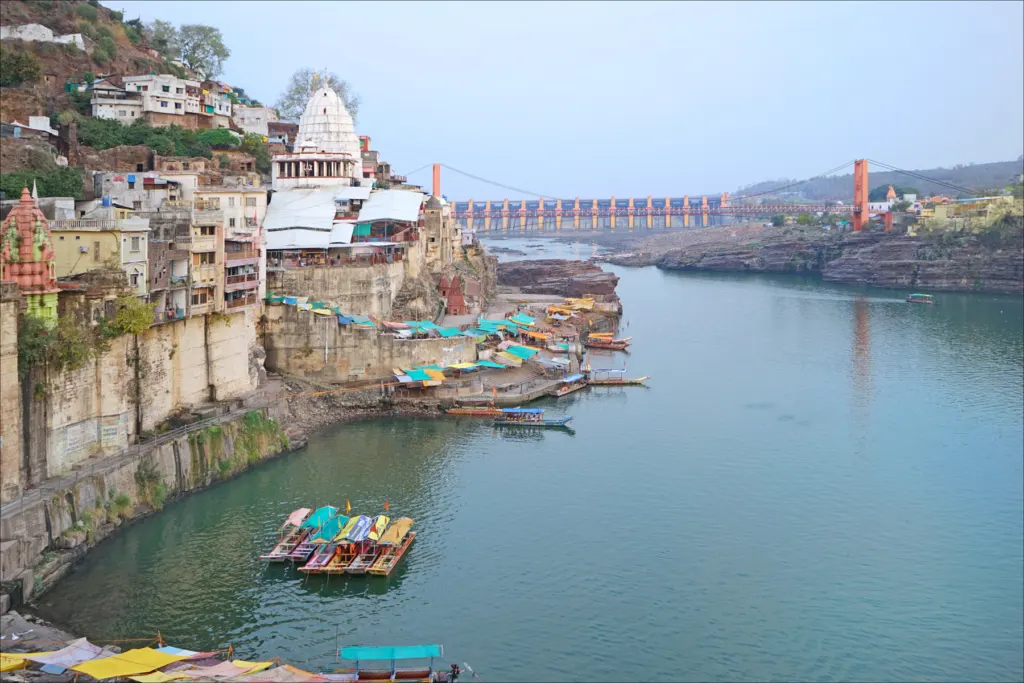
You keep the river on your right the whole way and you don’t cross it. Most walkers start at Amarkantak or Omkareshwar, though tradition allows any ghat. You fill a small vessel with Narmada water at the start and carry it to the end. Madhya Pradesh Tourism lists the route as Amarkantak, Dindori, Mandla, Jabalpur, Narmadapuram, Omkareshwar, Maheshwar and Barwani, then through Gujarat past Sardar Sarovar to Bharuch, and back up the other bank.
The one crossing allowed is at the mouth, where the Narmada meets the sea. Walkers take a boat across the estuary, a trip of several hours that lands at Mithi Talai on the north side. At the end they visit Omkareshwar, the island temple, which they could not reach while walking, and offer the water they have carried.
The traditional length was 3 years, 3 months and 13 days, with every ritual and the monsoon halt (chaturmas) observed. Today most walkers finish in 200 to 250 days. Dams and road diversions mean the walking distance varies from about 3,200 to 3,600 km. Villages and ashrams along the river have long given walkers food and a place to sleep, because a parikramavasi is treated as a guest of the river.
Good to know: A vehicle can’t follow every rule. Roads leave the riverbank for long stretches and cross the river on bridges. A road parikrama is a darshan of the main tirths on both banks in the right order, not the same thing as the walk. We tell you honestly where the route departs from the tradition.
The Uttar Vahini Parikrama in Gujarat
Between Rampura and Tilakwada in Narmada district, the river turns and flows north for a short stretch. Walking a loop around this stretch is believed to carry the merit of the full parikrama. It is held only once a year, for one month from Falgun Vad Amas to Chaitra Vad Amas in the Gujarati calendar. In 2026 it ran from 19 March to 17 April.
The walk is about 18 to 21 km and most people do it in a day, starting before dawn. It includes a river crossing by boat between Rengan and Rampura. The Gujarat Pavitra Yatradham Vikas Board sets up dome shelters with cots, toilets, drinking water, medical posts and ambulances along the route.
It has become very crowded. The state counted over 10 lakh pilgrims in 2025. In 2026 online registration was made compulsory on weekends and peak days, with a daily cap reported at around 25,000, and police turned back walkers who hadn’t registered. Boat queues ran to hours. Officials asked people to come on weekdays, and so do we.
2027 dates and the best time to go
The 2027 Uttar Vahini dates have not been announced. Going by the calendar, Gudi Padwa falls on 7 April 2027, so the month-long window should open around 6 April and close in early May. Expect the heat to be strong by then, so start walking by 4 or 5 am.
For the road yatra and Amarkantak, Madhya Pradesh Tourism suggests September to February. October to February is the most comfortable for older travellers. Walkers traditionally start after the monsoon and halt for chaturmas if they haven’t finished by the next rains. Narmada Jayanti brings big crowds to Amarkantak and the ghats.
Getting there
- Uttar Vahini (Rampura): Vadodara is the nearest big railhead and airport, with many trains from Mumbai and Pune. From there it is a road drive to the Tilakwada side of Narmada district.
- Omkareshwar and Maheshwar: Fly or take the train to Indore. Maheshwar is about 100 km from Indore by road and about 80 km from Omkareshwar. Our Indore, Ujjain and Omkareshwar guide covers the jyotirlinga darshan in detail.
- Amarkantak: The nearest railhead is Pendra Road in Chhattisgarh, 42 km away. Jabalpur airport is about 228 km and Raipur about 230 km.
What to carry, and notes for senior citizens
For the Uttar Vahini walk: comfortable walking footwear you have already broken in, a cap, a water bottle, ORS sachets, a torch for the pre-dawn start, and your registration confirmation on your phone. Pack light. For the full walk, tradition says carry as little as possible: a change of clothes, a blanket, the vessel for the Narmada water and your regular medicines.
An 18 to 21 km day is hard for many people in their 70s, especially in April heat. If your parents want to join, we can arrange for them to stay at the ghats and do darshan at the main points while the younger family members walk. The road yatra has no long walks except the steps at Dhuandhar falls and Dugdh Dhara, which are optional.
Questions pilgrims ask before booking
Does the Uttar Vahini Parikrama count as a full Narmada Parikrama?
That is the belief, and it is why lakhs of people walk it. Your family priest or guru may see it differently. It is not a substitute for the experience of the long walk, but it is the part most working families can actually do.
Do I have to register for the Uttar Vahini walk?
In 2026, yes, on weekends and peak days, and pilgrims without registration were stopped. The 2027 arrangements will be announced closer to the date. We register your group once the system opens.
Can we start the road yatra from Amarkantak instead?
Yes. Fly into Jabalpur or Raipur, start at the source and finish at Omkareshwar and Indore. The days are the same, in reverse.
Can you arrange the full walking parikrama?
We can get you to your starting ghat, arrange the first nights and sankalp, and bring you home at the end. During the walk most pilgrims rely on ashrams and villages, as tradition expects. Tell us if you need more support than that and we’ll see what can be arranged.
Checked November 2026. Route, distance, duration and Amarkantak access are from Madhya Pradesh Tourism. Uttar Vahini dates, facilities, pilgrim numbers and the 2026 registration rule are from Gujarat government announcements and news reports (AIR, DeshGujarat, IANS) of March 2026. Walking rules and the sea crossing are from published pilgrim accounts. The 2027 window is our estimate from the Gudi Padwa date in published panchangs, since official dates were not out when we checked.